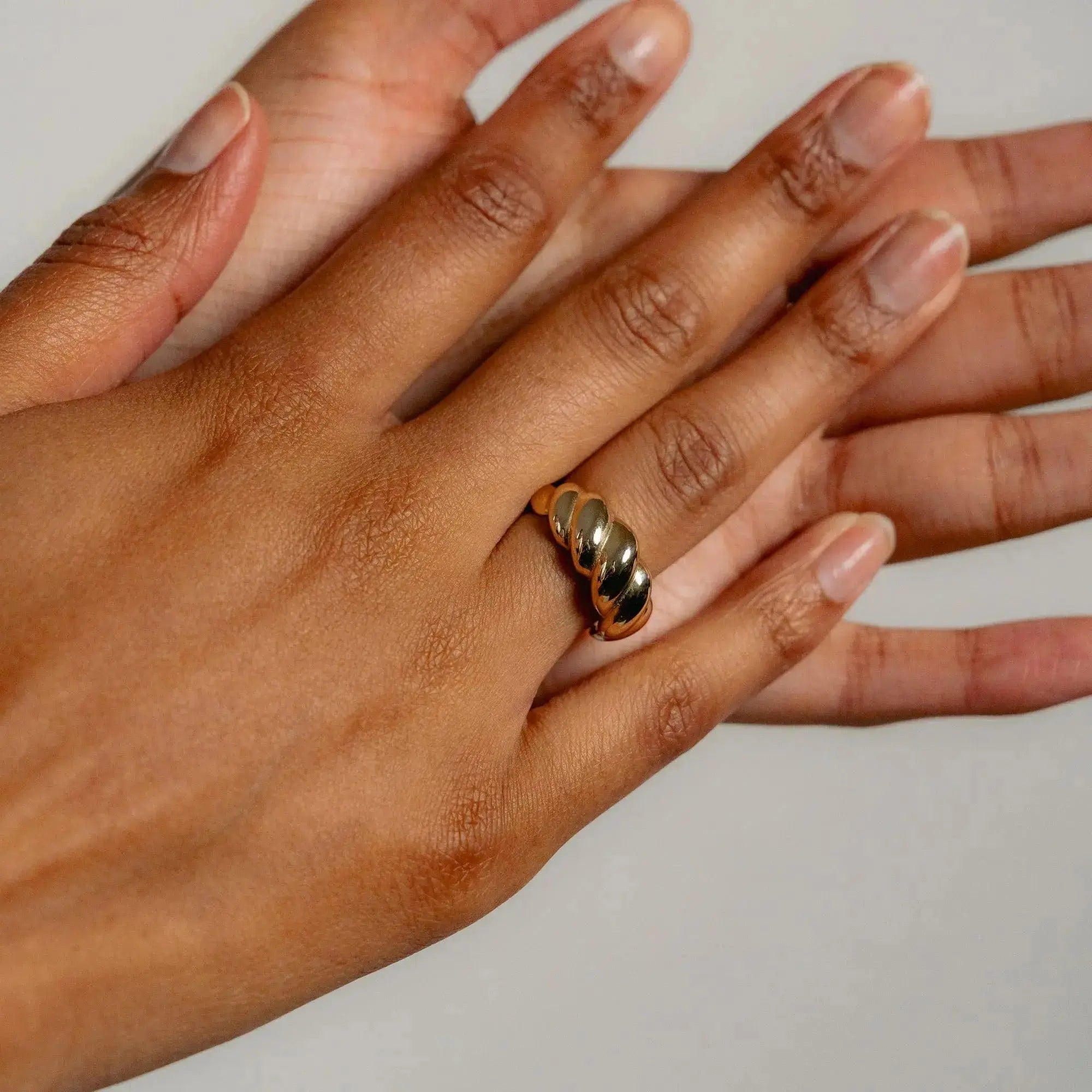
Solid gold vs gold plated vs gold vermeil: know what you are wearing
Journal · Jewellery Education
Gold is often assumed to be a single standard. In reality, the difference between solid gold, gold vermeil and gold-plated jewellery is significant — in durability, in value, and in how each piece performs over time.

What is solid gold?
Solid gold jewellery is made from a gold alloy all the way through — typically 9ct, 14ct, or 18ct. There is no coating, no base metal underneath, and no layer that can wear away. At 9ct, the piece is 37.5% pure gold, alloyed with other metals to increase durability. It will not tarnish, chip, or fade.
What is gold vermeil?
Gold vermeil is a substantial layer of gold (at least 18ct, minimum 2.5 microns thick) plated over a sterling silver base. It is a step above standard gold plating — the base metal is higher quality and the gold layer is thicker. With careful wear it can last years, but the plating will eventually wear through, particularly at high-contact points like clasps and ring shanks.
What is gold-plated jewellery?
Gold-plated jewellery has a thin layer of gold deposited over a base metal (usually brass, copper, or steel). The gold layer is typically under 0.5 microns — far thinner than vermeil. It captures the look of gold at a low price, but the plating wears away within months of regular wear.
Side-by-side comparison
| Type | Hallmark | Longevity | Tarnish | Best for |
|---|---|---|---|---|
| Solid gold | 9ct, 14ct, 18ct | Lifetime | Never | Everyday wear, investment pieces |
| Gold vermeil | 925 + GP or Vermeil | 1–5 years with care | Eventually | Accessible jewellery with better quality base |
| Gold-plated | GP, GEP, HGP | Months | Yes | Trend pieces, occasional wear |
How to tell solid gold from gold-plated
The easiest way is the hallmark. Solid gold is stamped with its carat number: 375 (9ct), 585 (14ct), or 750 (18ct). Gold-plated pieces are usually stamped GP, GEP, or HGP. If there is no hallmark at all, treat the piece as plated.
Another tell: if a piece leaves a green mark on your skin, the base metal is reacting with your skin — a sign of plating that has worn through to copper or brass underneath.
Is solid gold worth it?
For everyday jewellery, yes. The cost-per-wear calculation is straightforward. A solid gold ring at $500 worn daily for 10 years works out to around 14 cents per wear. A plated ring at $50, replaced twice a year, costs more over the same period and produces more waste. Solid gold also holds resale value; plated pieces have none.
Glasaje’s commitment: solid gold only
At Glasaje, every piece is crafted from solid 9ct gold or sterling silver, made in Melbourne using recycled materials. No plating, no shortcuts, no compromises. Every piece is backed by our 12-month warranty.
Frequently asked questions
Does solid gold tarnish?
No. Solid gold does not tarnish. It may accumulate surface oil and dust over time, which makes it appear dull — but this is easily removed with warm soapy water. The gold itself does not change.
Does gold-plated jewellery turn your skin green?
It can, once the plating wears through and the base metal (usually copper or brass) is exposed. Solid gold and sterling silver do not cause this reaction.
How long does gold plating last?
On frequently worn pieces like rings and bracelets, gold plating typically lasts 6 to 12 months before wearing through noticeably. Gold vermeil lasts longer — 1 to 5 years with careful handling.
Is gold vermeil better than gold-plated?
Yes. Gold vermeil has a thicker gold layer (minimum 2.5 microns vs under 0.5 microns for standard plating) and a higher-quality sterling silver base. It lasts longer and is less likely to cause skin reactions. But neither lasts as long as solid gold.